What is this "moon joy"?
The crew of NASA's Artemis II Mission returned with more than data. They returned to a planet reflecting on the joy they had experienced in space.
After a moment of the crew's rapturous description of the moon's features, NASA's mission control replied with, "Copy...moon joy."
"...copy, Moon joy." pic.twitter.com/WsN2hTeeVk
— NASA Solar System (@NASASolarSystem) April 5, 2026
From there, "moon joy" became a moniker of happiness across the internet—something dazzling felt by humanity in the middle of ongoing war.
In fact, NASA took the interwebs to define "moon joy" for us:
Moon joy [noun]
— NASA (@NASA) April 10, 2026
the feeling of intense happiness and excitement that only comes from a mission to the Moon
The Artemis II crew bring us endless Moon joy. pic.twitter.com/7vrS1lLd0C
A stellar crew
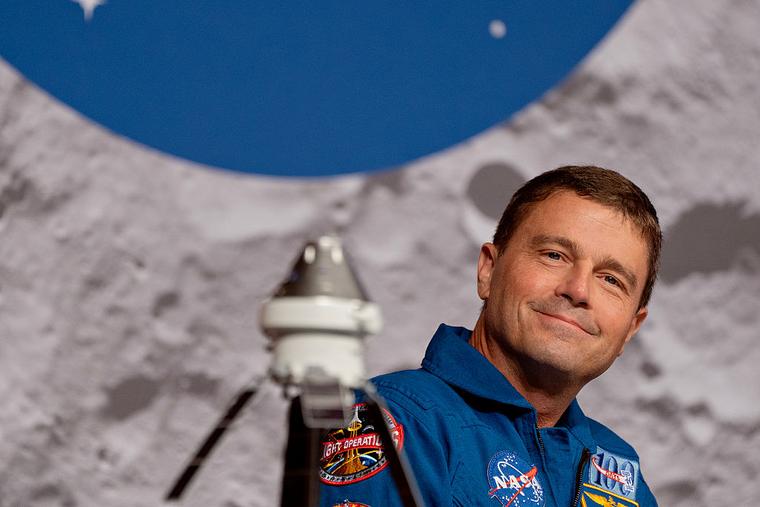
Then there's the crew's joy and awe during and after the mission. Notably, Artemis II commander Reid Wiseman shared a touching story after their splashdown and recovery. He wanted to see a chaplain, not knowing how to process what they had witnessed in space. Wiseman, during the press conference, shared how he "just broke down in tears" when he saw the chaplain with a "cross on the collar" approach him. He also described himself as "not really a religious person," yet this defining moment, of flipping the perspective of humanity, drew him to unexplainable awe.
And, there's Christina Koch, Artemis's mission specialist. Her unwavering bravery, positivity, and authenticity has inspired many. In NASA's "Meet Artemis II Astronaut Christina Koch" video, she expresses her joy over doing things that make her "feel small" and scare her.
Geeking-out over galaxies
I've never been in space, but I can only imagine what it means to feel that "small," seeing the earth from a distance as a tiny, fragile orb cradling all of humanity...to see the vast cosmos floating behind the earth and lunar crags up close. Perhaps, feeling small is good for us.
Viewing the earth from this perspective shifted the astronauts' view of life. We live our lives from our singular, zoomed-in, first-person perspective. But to view life out there in such a spectacular way is life changing.
The Bible captures this "moon joy" and awe as well. We could turn to Genesis one, but I feel like the writer of Psalm 19 had some moon joy when penning their poem:
The heavens declare the glory of God,
and the sky above proclaims his handiwork.
Day to day pours out speech,
and night to night reveals knowledge.
There is no speech, nor are there words,
whose voice is not heard.
Their voice goes out through all the earth,
and their words to the end of the world.
Psalms 19:1-4 (ESV)
When the ancients spoke about "the heavens," they meant all the things out there above the earth: the sun, the moon, the stars, the Milky Way, and distant galaxies. From their perspective, the heavens rotated around the earth (though we now know we orbit within the cosmos).
But, this Psalm is not a scientific study. Rather, it's a theological reflection on the Creator and his creation, on "moon joy," and the power of God's creative word. When the Psalmist writes that "the sky above proclaims his handiwork," it's as if God is illuminating the hearts of humanity through the very things he has made. If the heavens above shout out God's glory and goodness, then surely floating in those heavens—around the moon no less—would increase one's sense of awe.
Why we need "Moon Joy" right now
Our world needs more of this moon joy. If the reaction online is any indication, we're thirsty for this sense of awe. We need our perspectives shifted, to be shaken out of our fears, and to know there's a good God who sees us.
surely floating in those heavens—around the moon no less—would increase one's sense of awe.
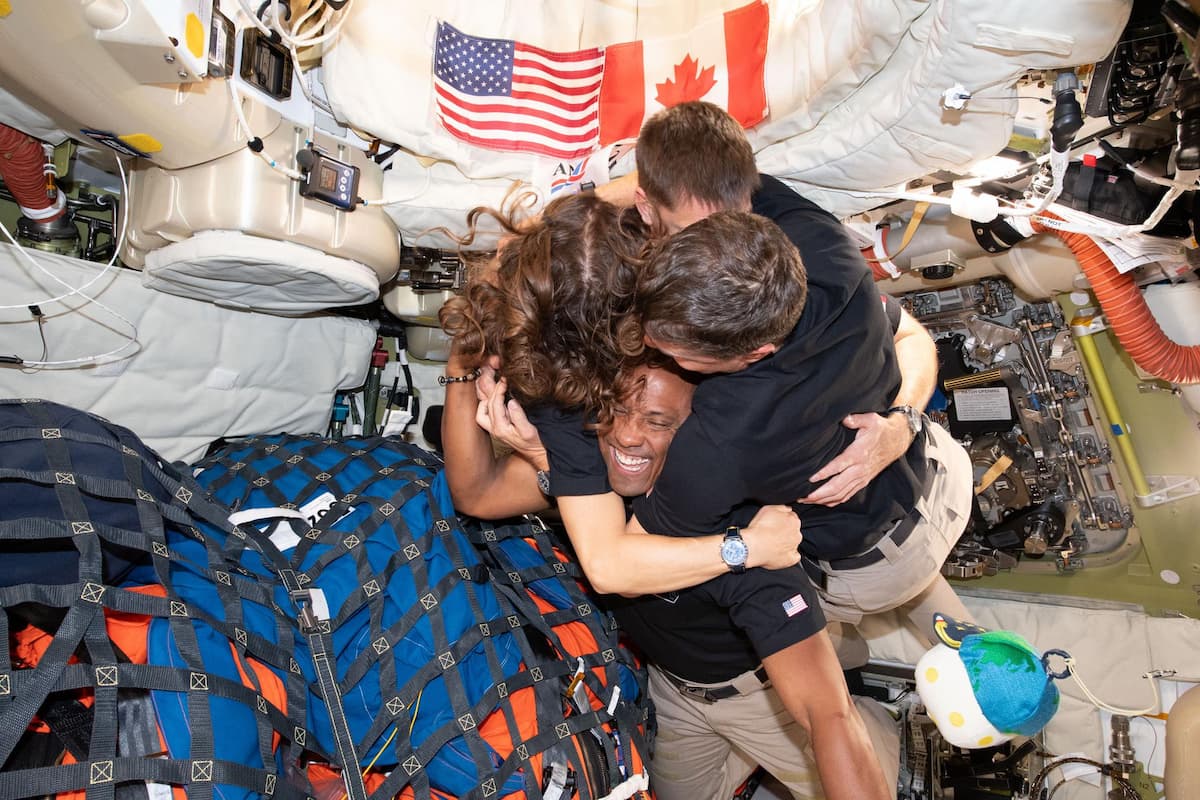
Church, we have much to learn from the crew of the Artemis II. They remained focused and singular on their mission. They kept unity. They loved and cared for each other. They spoke about God and did not entertain the dignitaries of the world. They toiled together, geeked-out together, and endured together for the sake of their main goal.
As Christians, our trajectory is not cementing a political party in power. It's not overtaking the world by violent force. Our mission is reconciliation through the Gospel. It's loving God with our whole being, and carrying with us daily some moon joy. And, in turn, it means loving our neighbor as Christ has loved us.
To the crew of Artemis II, thank you for showing us a better way and reminding us to keep the wonder in our lives.
Related reads
 Jordan Hopkins
 Alyssa Murphy